A Lawn Mower, a Twelve-Year-Old, and the World We Didn’t Know Was Coming
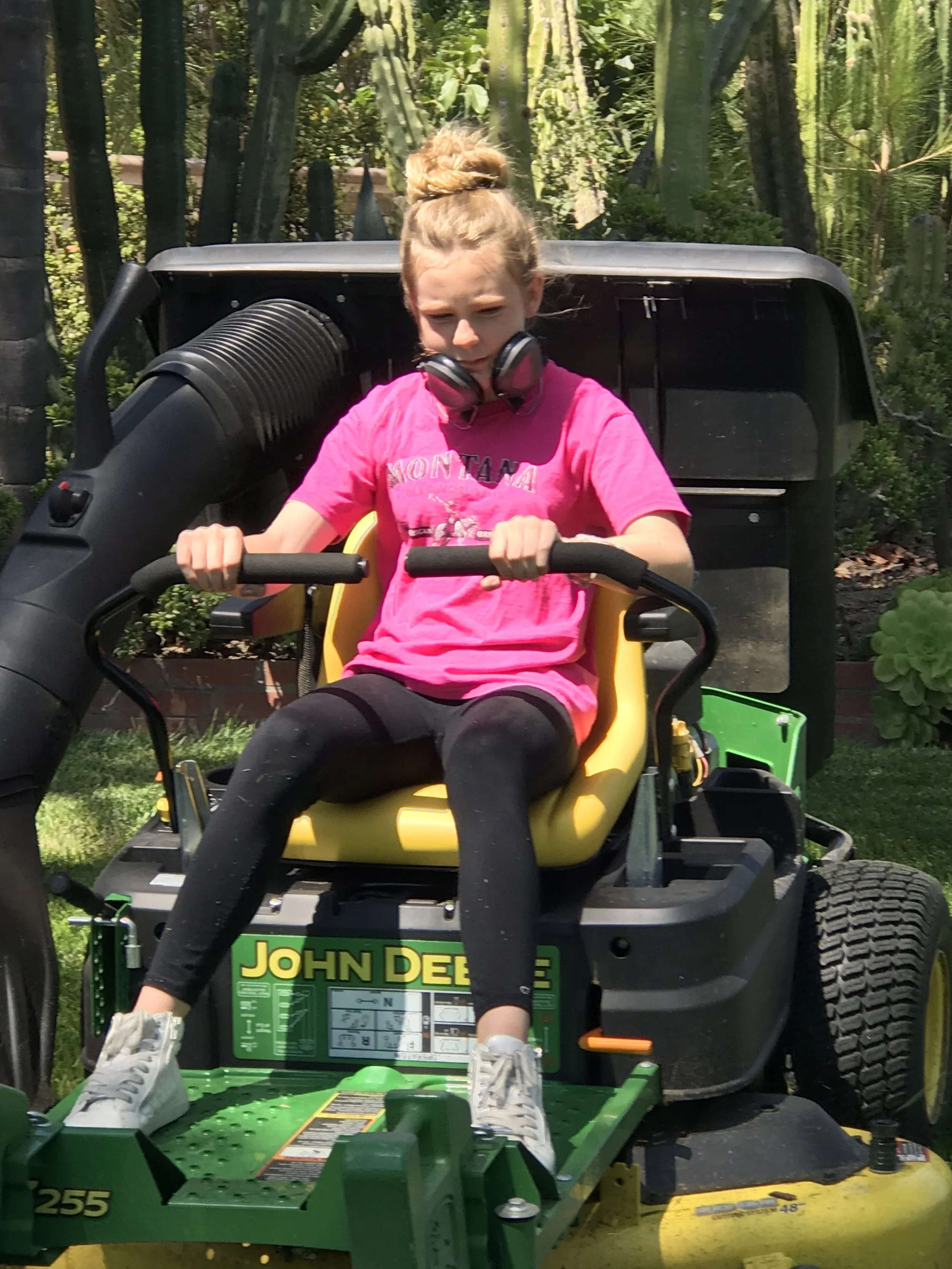
Ten years ago, my daughter was twelve and determined to mow our entire property on our bright green John Deere tractor. She was small for the machine, although her confidence never wavered. I remember watching her circle the yard with a sense of certainty that felt contagious. Life during that season carried a familiar rhythm. Technology was progressing at a pace that still allowed space to understand each change before the next one arrived. Nothing felt like it was racing ahead of us.
That memory returns to me often as artificial intelligence reshapes the world at a speed that challenges every assumption we once held about learning and work. The contrast between that slow afternoon and the pace of today creates a noticeable tension. New developments appear so quickly that they influence how we understand communication, leadership, and problem-solving almost immediately. The acceleration does not wait, which created a very real responsibility for me as a school leader.
Leading a non-classroom-based school meant supporting students who learned from kitchen tables, community spaces, libraries, and their own homes. Their teachers connected with them through home visits, virtual meetings, phone calls, and carefully designed instructional plans that had to work in diverse environments. The absence of a traditional setting required a level of intentionality that shaped every interaction. Teaching lived in the relationship, in the clarity of communication, and in the purpose behind each plan. A world moving toward AI only amplified the need for that intentional approach.
Our teachers recognized this long before AI dominated the public conversation. They understood that a shared vision for strong instruction could not come from outside our organization. The work needed to be defined by the people who experienced its challenges and possibilities every day. The Teaching With Intention Guide emerged from that understanding. It reflected how to design meaningful instruction for a model without hallways or bell schedules. It supported consistent communication with families and strengthened the way our school served students across varied learning environments. The guide gave us alignment during a time when the world was already shifting beneath us.
The rapid rise of artificial intelligence continues to affirm the importance of that work. Human skills form the foundation of a student’s ability to learn and lead. Students benefit from the ability to think critically, communicate with honesty, navigate unfamiliar situations, collaborate with clarity, reflect on their decisions, and integrate new ideas. These abilities support resilience in a world that continues to evolve at an extraordinary pace.
Illuminate XR grew from this lived experience. The Power Six—Curiosity, Critical Thinking, Communication, Emotional Intelligence, Metacognition, and Synthesis—represent the human capacities that strengthen academic progress and personal identity. These skills can be taught with purpose and measured in ways that help students recognize their own growth. They reflect the human side of learning that artificial intelligence cannot replace.
The memory of my daughter on that tractor stays with me because it represents a moment when life felt steady. She has grown into adulthood and is now raising children of her own, which brings the future into sharper focus. My grandchildren deserve a world that prepares them for possibility rather than uncertainty. Students everywhere deserve the same. Educators deserve clarity and support as they navigate a moment when the world refuses to slow its pace.
Human skills have always shaped how people learn, lead, and connect. Artificial intelligence has highlighted their importance in a way that cannot be ignored. The future will belong to those who think deeply, communicate clearly, make thoughtful decisions, and move through complexity with resilience and compassion. Our responsibility is to ensure that every young person has the opportunity to grow these strengths, regardless of where or how they learn.
